
Fractional Ownership, SM REITs & Tokenised Property in India (2026): What It Means for Developers
SEBI's SM REIT framework put fractional property on a regulated footing. Here is what changes for Indian developers: a Rs 10 lakh investor ticket, a new channel layer, and the operations to handle both.
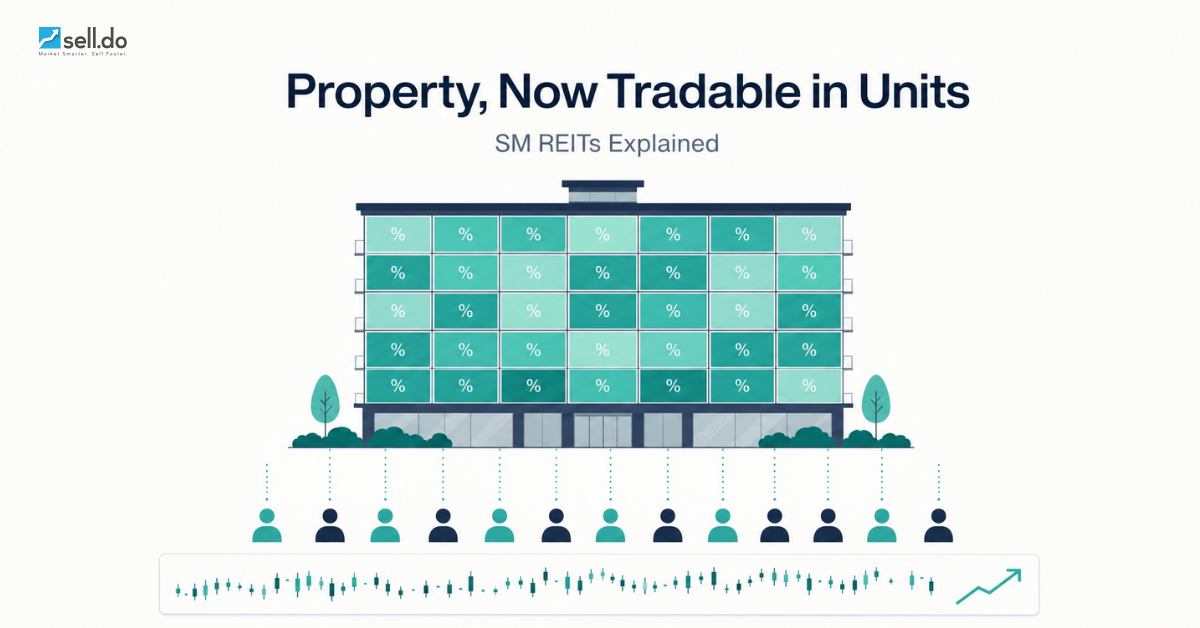
Somewhere in your commercial sales pipeline this quarter, an enquiry will come in for a ten-lakh ticket on an office asset you priced at forty crore. It will not be a mistake, and it will not be a time-waster. It will be an investor who has spent the last eighteen months buying property the way they buy mutual funds: in units, on an exchange, with a demat statement instead of a sale deed.
That buyer exists because the regulatory ground moved. SEBI notified its Small and Medium REIT (SM REIT) framework on 8 March 2024, and the market it was built to regulate has been operating under it since 2025. For Indian developers, this is not a finance story you can leave to the CFO. It changes who walks into your commercial desk, what they ask for, and how fast your team has to answer.
What SEBI actually changed
Before the framework, fractional ownership platforms sold slices of commercial property through SPVs with no unified regulator, no standard disclosure, and effectively no secondary market. The SM REIT regulations closed that gap with a specific set of rules:
- Asset size band of Rs 50 crore to Rs 500 crore per scheme — deliberately below the Rs 500 crore floor of a conventional REIT, which is where the "small and medium" sits.
- Minimum investment of Rs 10 lakh per investor. Low enough to widen the pool dramatically, high enough that SEBI still treats it as a serious-money product.
- At least 95% of scheme assets must be in completed, revenue-generating property. Under-construction inventory does not qualify. This single clause decides most of what follows for developers.
- 95% of net distributable cash flow paid out quarterly, so the product behaves like a yield instrument, not a capital-appreciation punt.
- Rs 20 crore net worth for the investment manager, plus experience requirements — a real barrier to entry that consolidated a fragmented platform market.
- Units list on the NSE or BSE, which is the part that changes investor behaviour most, because an exit no longer requires finding a buyer for an illiquid SPV stake.
Adoption has been deliberate rather than explosive. Property Share listed PropShare Celestia on the BSE in April 2026 as the third SM REIT scheme in the market. Colliers has estimated that over Rs 4,000 crore of assets currently sitting on fractional ownership platforms could migrate into SM REIT structures over a two-to-three-year window. And from 1 January 2026, SEBI reclassified REIT units as equity-related instruments for mutual fund purposes, which quietly opened a much larger institutional bid for the category.
From the team that built Sell.Do
See how Sell.Do runs your sales, pre-sales and marketing on one AI-first platform.
Fractional ownership, SM REITs and tokenisation are three different things
Sales teams lose credibility fast when they use these interchangeably in front of an informed investor. The distinctions are simple:
- Fractional ownership is the commercial arrangement: several investors co-own one asset, usually through an SPV, each holding a proportionate economic interest. It predates any regulation and still exists outside the SM REIT structure for assets that do not qualify.
- An SM REIT is a regulated vehicle. It is fractional ownership with a SEBI registration, mandatory disclosures, a trustee, quarterly distributions and exchange-listed units. Same economics, materially different investor protection.
- Tokenisation is a record-keeping and settlement technology. It describes how the unit is represented and transferred, not what the investor legally owns. A tokenised interest can sit inside a regulated structure or outside one, and in India the regulated path is still the SM REIT. If you want the mechanics of how the token layer works end to end, we covered that in how real estate tokenization works.
The practical takeaway for a sales head: an investor saying "tokenised property" almost always means "fractionally owned, and I would like to know who regulates it." Have the answer ready.
RERA has not gone anywhere
SEBI regulates the investment vehicle. RERA still regulates the project and the sale of the unit. The two operate on different layers, and the boundary matters most when a developer starts thinking about SM REITs as an inventory strategy.
Because 95% of an SM REIT's assets must be completed and revenue-generating, your under-construction residential tower is not a candidate. What is a candidate is leased, income-producing commercial: office floors, warehousing, retail, the strata-sold inventory that a lot of developers are already carrying. In the top six Indian cities, roughly 28% of Grade-A office stock already sits in strata-sale or fractional models, which is a large pool of assets now looking at a regulated exit route that did not exist three years ago.
Five things this changes on your sales floor
1. A new enquiry profile, at ten times the volume. Dropping the entry ticket from crores to Rs 10 lakh does not just widen the funnel, it changes its shape. More enquiries, smaller value each, far less patience. A commercial desk built around twelve high-touch conversations a month is not built for four hundred.
2. Speed-to-lead stops being a nice-to-have. This investor is comparison-shopping across listed instruments in the same browser session. If your first response takes six hours, the conversation is already over. Our own read on the first-touch window is in speed to lead in real estate, and the maths does not get gentler for a Rs 10 lakh ticket.
3. Your CPL benchmarks break. Cost per lead figures calibrated on HNI commercial buyers will look catastrophic against retail-ticket investor traffic, and cost per booking will look far better. If you are still optimising campaigns on CPL alone, this is the moment that metric misleads you — the reframe is in cost per lead vs cost per booking.
4. A new channel layer appears. Wealth advisors, RIAs and investment platforms start behaving exactly like channel partners: they bring volume, they expect attribution on their referrals, and they want to know their payout position without emailing your accounts team. The playbook you use for brokers largely transfers.
5. Disclosure discipline leaks into your buyer communication. Investors coming from a SEBI-regulated product expect documented, consistent, auditable answers. Ad-hoc WhatsApp promises from an individual salesperson are a liability, not a shortcut.
Where most teams will actually break
The gap is rarely strategy. It is operations. Four failure points show up repeatedly:
- Tagging. If a wealth-platform referral and a Meta campaign lead land in the same untagged bucket, you cannot tell which channel is producing the new investor volume, and you will fund the wrong one next quarter.
- Turnaround time. Retail-ticket investors churn on delay. Without a live TAT view by team and by source, slippage is invisible until the month closes.
- Attribution to booking. Source-to-booking traceability is the only way to defend the marketing spend when finance asks what the new segment actually returned.
- The compliance trail. Every call and message needs to be logged against the lead record, not living in a salesperson's personal phone.
This is unglamorous plumbing, and it is exactly what a real estate CRM is for. Sell.do captures leads from Meta, Google, portals, the website, walk-ins and channel partners into one system with source tagging applied at capture, so the new investor channel is separable from day one. Built-in calling and WhatsApp keep the entire conversation on the lead record rather than a personal device, and the reporting layer carries the tag through from source to campaign to booking, which is what turns "we tried the fractional investor segment" into a number you can act on. For the partner side, the same channel-partner module that handles brokers — logins, referral attribution, payout tracking — handles wealth platforms without a parallel process.
What to do in the next two quarters
- Audit your completed, leased commercial inventory against the SM REIT eligibility test. Know which assets qualify before a platform approaches you, not after.
- Create a distinct lead source and tag set for fractional and SM REIT enquiries so the segment is measurable from the first enquiry.
- Set an explicit first-response SLA for this segment and put it on a dashboard someone owns.
- Brief your commercial team on the three-way distinction above. Confusing tokenisation with regulation in front of an informed investor costs you the deal.
- Standardise the disclosure pack. If the answer to "who regulates this" differs by salesperson, you have a problem larger than conversion.
- Treat wealth platforms as channel partners from the start, with the same onboarding, attribution and payout visibility you give brokers.
None of this requires a bet on where tokenisation lands in five years. It requires being operationally ready for a buyer who is already calling.
Related reading
- How Real Estate Tokenization Works: The Complete Guide
- Top Real Estate Developers by City in India (2026)
- Real Estate Post-Sales Management in 2026: From Booking to Possession
If your commercial desk is about to meet a lot more enquiries at a much smaller ticket size, the constraint will be capture, tagging and response time — not interest. See how Sell.do brings every source, call and WhatsApp conversation into one AI-agentic CRM built for Indian real estate at sell.do, or book a walkthrough and we will map it to your current commercial pipeline.
Insights from the Sell.do real-estate CRM team.