
Speed to Lead in Real Estate: Why the First 60 Seconds Decide the Booking (2026)
The first 60 seconds after a real estate lead lands decide whether it books or dies. Here's the speed-to-lead math, the five leaks that kill paid leads, and how to fix them in 2026.
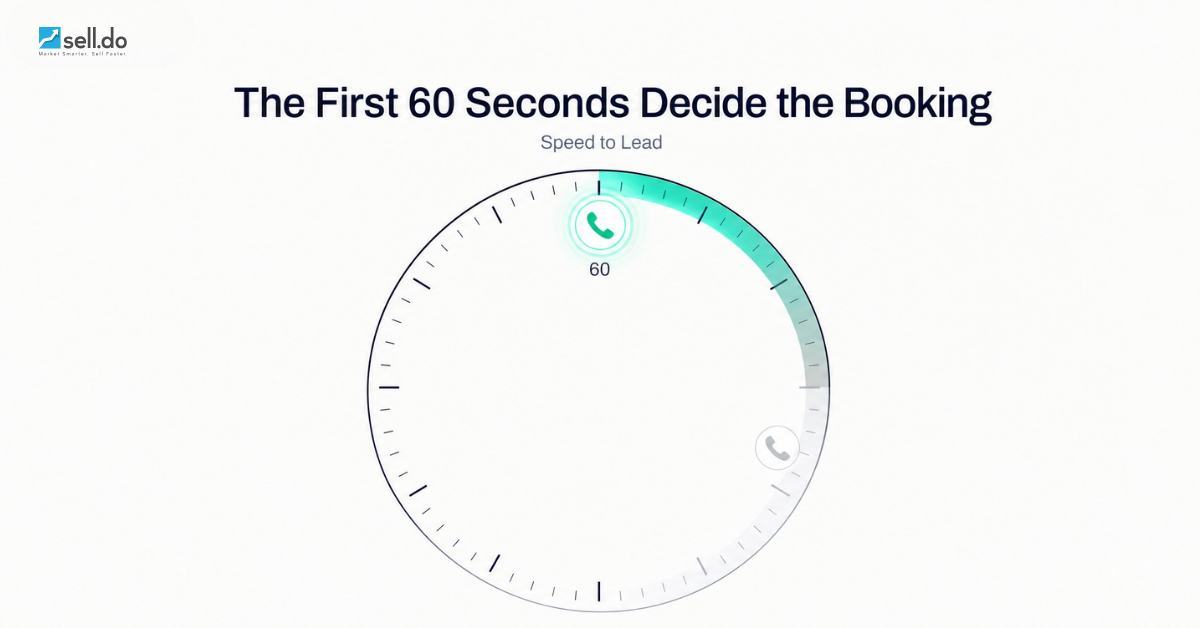
A Pune developer spends Rs 900 per lead on Meta, another Rs 1,400 per lead on Google, and pours a launch budget into portals. Then the leads land in a shared inbox at 9:47 PM, get exported to a spreadsheet the next morning, and reach a presales caller at 11:30 the following day. By then the buyer has already spoken to two other projects. The money was spent perfectly. The lead died in the handoff.
For presales and inside-sales teams, speed to lead is the single most under-managed number in the funnel. You can obsess over cost per lead, creative, and targeting, but if the first call lands hours or days late, none of it converts. Here is what the first 60 seconds actually decide, and how to stop losing bookings you already paid for.
The 60-second window is not a slogan
The classic Lead Response Management study found that contacting a web lead within the first minute lifts conversion by nearly 400% versus waiting, and that the odds of qualifying a lead drop roughly 10x after the first hour. Later research from InsideSales and Harvard Business Review echoed the same shape: firms that responded within an hour were 7x more likely to have a meaningful conversation than those that waited even 60 minutes, and most leads were never contacted within 24 hours at all.
In practical terms for Indian real estate: a lead called back inside a minute might convert to a genuine conversation around 23% of the time, while the same lead called back after a few hours often converts under 5%. The buyer's intent is highest in the seconds after they submit the form or tap a Click-to-WhatsApp ad. Every minute you wait, you are refunding your own ad spend.
From the team that built Sell.Do
See how Sell.Do runs your sales, pre-sales and marketing on one AI-first platform.
The five leaks where paid-for leads die
Slow response is rarely one problem. It is usually five smaller leaks compounding. Audit your own funnel against these:
- Queue delay: leads sit in a form backend, an email inbox, or an unassigned pool for hours before anyone owns them. The clock is already running.
- Never-called: a share of leads are simply never dialed, lost to volume, weekends, or a busy roster. A lead nobody calls has a 0% conversion rate no matter how good the campaign was.
- Single-attempt: the caller tries once, the buyer does not pick up, and the lead is marked dead. Most contacted buyers need five to eight attempts across call and WhatsApp before they engage.
- Duplicate leads: the same buyer enquires from Meta, a portal, and the website. Without dedup they get called by three people or none, and your source data is polluted.
- Untagged source: the lead arrives without its campaign, so you cannot tell which spend produced it, cannot prioritise high-intent sources first, and cannot tie the eventual booking back to a rupee of budget.
The first three leaks are almost always fixed with instant capture and automated routing rather than more people. If a new lead is auto-assigned to an available caller the moment it lands, the queue delay disappears. Our breakdown of how lead routing reduces response time walks through the rules that make this automatic.
The raw-lead-to-site-visit math
Most Indian projects convert raw leads to booked site visits at roughly 2% to 6%. Teams that fix speed to lead routinely push that to 8% to 12%, because the biggest lever is not persuasion, it is reaching the buyer while intent is still hot and following up enough times to actually connect.
Run the arithmetic on 1,000 leads a month. At a 3% site-visit rate you get 30 visits; at 9% you get 90, from the same spend. If one in five site visits books, that is the difference between 6 and 18 bookings a month with no extra ad budget. Speed to lead is not a soft metric, it is a revenue multiplier you already own.
What speed to lead actually requires
- Unified instant capture from Meta, Google, portals, website, walk-ins and channel partners into one system, so no lead waits in a silo or a spreadsheet.
- Automated routing with a TAT clock that assigns each lead instantly and escalates the moment a first-touch SLA is breached, so slow follow-up is visible, not hidden.
- Built-in calling and WhatsApp so the first touch happens in seconds and every attempt is logged automatically, not scribbled in a notebook.
- A multi-attempt cadence that keeps trying across channels for days rather than dying after one missed call.
- Source tagging and scoring so hot, high-intent leads jump the queue and every booking traces back to its campaign.
How Sell.do compresses the first touch
Sell.do captures leads from every source the instant they arrive, dedupes and tags them by campaign, and auto-routes them to an available caller with a TAT clock running. Built-in calling and WhatsApp mean the first touch is a click, not a context switch, and its AI agent can respond and qualify on WhatsApp in seconds while a human is still picking up the phone, which matters because WhatsApp-first buyers expect an instant reply.
Jarvis AI then scores each lead, auto-logs calls, and fires the next follow-up so a busy presales team never drops to a single attempt. Speed to lead is the opening move; the full first-touch-to-booking lead management playbook carries the same discipline through qualification, site visit and booking.
If you want the full framework, the Real Estate Presales Playbook breaks down the 60-second window, the five leaks, and the response cadence into a step-by-step system your presales team can run this quarter. See built-in calling and AI lead scoring in action, or book a walkthrough, and stop refunding the ad spend you already paid for.
Related reading
Insights from the Sell.do real-estate CRM team.