
Who Owns the Buyer? Lead Registration for Channel Partners in India (2026): Timestamps, Validity Windows and an Evidence Pack
Two partners, one buyer. Learn how same-day registration, written acknowledgements, validity windows and a six-item evidence pack settle channel partner lead ownership disputes in India.
A developer's sales head in Pune gets two calls on the same Saturday afternoon. Two channel partners, each swearing the same buyer is theirs. One registered on WhatsApp on Tuesday, the other emailed on Wednesday but brought the family to the site on Saturday. Whoever the developer sides with, the other partner stops sending leads. This is the oldest argument in Indian real estate distribution, and it is almost always a record-keeping failure, not a character failure.
This guide is about registration and ownership only: how a lead gets registered, how long that registration protects you, and the evidence that settles a dispute in minutes instead of weeks. Payouts, slabs and TDS are a separate subject, covered in our guide to channel partner brokerage and payouts.
Why ownership disputes happen in the first place
Most disputes trace back to three gaps. First, there is no single moment at which a buyer becomes 'registered'. Partners send names over WhatsApp, calls, emails and a shared Excel sheet, so the developer's team has no reliable timestamp. Second, validity windows are vague or unwritten, so nobody knows whether a registration from 70 days ago still counts. Third, the site visit, which is the moment of real ownership, is tagged to whoever is standing at the reception desk rather than to the partner who actually brought the family.
For brokers, the stakes are blunt: an unregistered or badly registered lead is a lead you can lose with no recourse. For developers, the cost is quieter but larger: your best partners drift to rival projects where registration is cleaner. Our piece on where brokers lose deals shows how much of this leakage starts at the very first hand-off.
From the team that built Sell.Do
Onboard channel partners and track every sourced lead in one place.
What a clean lead registration looks like
Register the same day, in the developer's format
Every developer has a registration format, usually a short form or message with buyer name, phone number, project, configuration and budget. Use it exactly as specified, and register on the day you first speak to the buyer, not after the first site visit. A same-day record is the strongest single piece of evidence you will ever hold.
Get a written acknowledgement
A registration is only as good as the developer's reply. Ask for an acknowledgement that quotes your buyer's masked number, the project and the date and time. A thumbs-up emoji is not an acknowledgement. If the developer's team cannot confirm in writing, treat the lead as unregistered and say so.
Know the validity window
Validity windows differ by developer and are set in the empanelment agreement, commonly somewhere between 30 and 90 days, with renewal on a fresh interaction such as a new site visit. Ask for yours in writing during empanelment (see how to get empanelled with a developer), and diarise the expiry so you can renew before it lapses.
Tag the visit to the partner, not the desk
The site visit is where most disputes are decided. The developer's team should record who accompanied the family, the time of arrival and the partner's ID, ideally with a verification code or a signed visit slip. A visit tagged to a partner is much harder to contest later.
The six-item evidence pack
When two partners claim one buyer, the developer's tiebreaker is evidence. Keep these six items for every lead, and you can resolve most disputes in a single call:
- Registration timestamp: the original message, form or CRM entry showing date and time.
- Developer acknowledgement: the written reply confirming receipt and the project.
- Buyer consent trail: proof the buyer agreed to be contacted, such as a call recording or a WhatsApp opt-in.
- Interaction log: calls, WhatsApp messages and follow-ups showing continuous engagement.
- Site visit proof: visit slip, verification code or reception log tagged to your partner ID.
- Validity status: the registration expiry date and any renewal on file.
Treat vendor-published dispute statistics, including the often-quoted figure that a fifth of partner disputes stem from duplicate registrations, as indicative rather than audited. The pattern holds across developers we speak to, but no regulator publishes a national number.
When two partners claim the same buyer
A fair rule set, agreed before the first dispute, saves relationships. A common order of precedence is: earliest valid registration wins; if both are valid, the partner with the verified site visit wins; if the visit was joint, the developer splits the brokerage by a pre-agreed ratio. Whatever you choose, publish it in the empanelment terms and apply it consistently. Inconsistency does more damage than any single ruling.
Developers should also decide in advance how to treat a lead who arrives as a direct walk-in or portal enquiry and is then claimed by a partner. Our guide to capturing and tagging portal leads covers source tagging so that origin is never in doubt.
How developers should run registration at scale
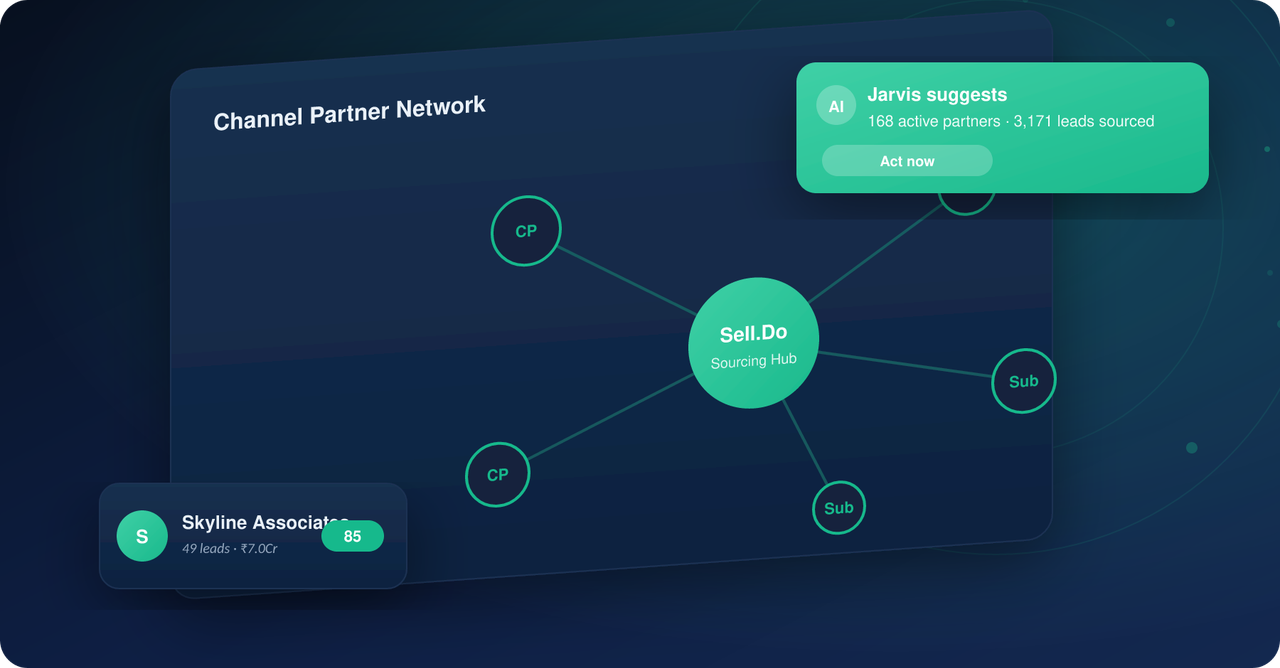
Once a developer has 50 or more active partners, spreadsheets and WhatsApp groups stop working. The practical standard is a single registration inbox: partners submit through a portal or form, duplicates are checked automatically against existing leads and active registrations, the partner receives an instant timestamped acknowledgement, and the validity clock starts on its own. Sell.do's channel-partner module handles this with whitelabel partner logins, duplicate detection at the time of registration and a visit-tagging step linked to the partner record, so the evidence pack builds itself as the lead moves forward. The broader operating model is laid out in our channel partner management playbook.
A one-page checklist for brokers
- Register the same day, in the developer's own format.
- Insist on a written acknowledgement quoting project, date and time.
- Get the validity window and renewal rule in writing at empanelment.
- Make sure every site visit is tagged to your partner ID.
- Save the six-item evidence pack for each lead in one folder.
- Diarise expiry dates and renew with a fresh interaction before they lapse.
Related reading
- Channel Partner Brokerage and Payouts in India (2026)
- Real Estate Lead Leakage: Where Brokers Lose Deals
- Channel Partners in Real Estate: Role, Benefits and How the Model Works in India
If you manage channel partners or sell through them, see the whitelabel channel-partner module in Sell.do, where registrations are timestamped, duplicates are caught instantly and every site visit is tagged to the right partner. For a deeper checklist, download The Broker's Zero-Leakage Playbook.
Insights from the Sell.do real-estate CRM team.