
Navigating Success: Understanding Process Management in the Real Estate Business
The real estate industry is well-known for its complexity and the variety of tasks it includes on a regular basis. Real estate professionals have to look over everything, right from listing properties and running market…
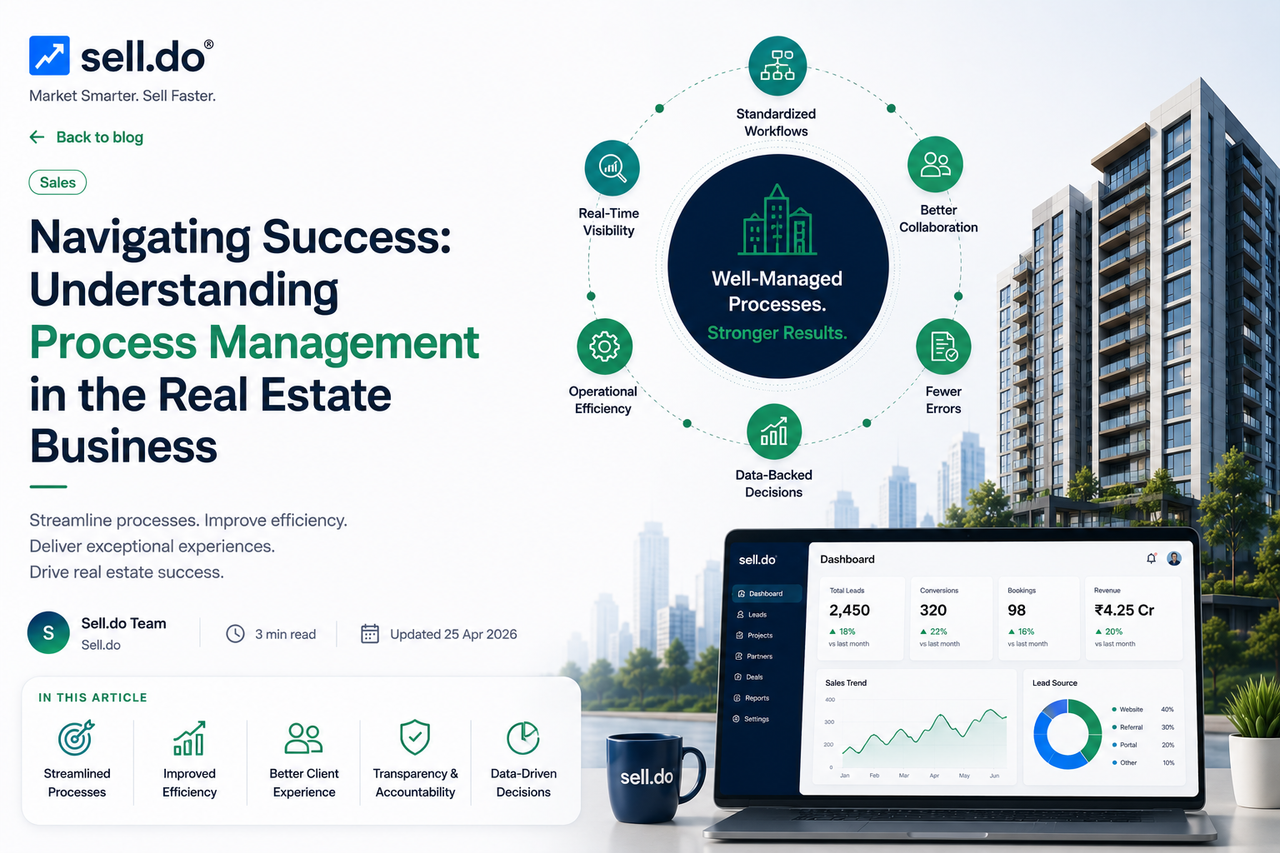
The real estate industry is well-known for its complexity and the variety of tasks it includes on a regular basis. Real estate professionals have to look over everything, right from listing properties and running marketing campaigns to managing client relationships and organizing transactions. The potential for profit and business growth in this industry is substantial, but it can be a challenging journey without proper process management.
In this blog, we'll dive into the concept of real estate process management and how it plays a significant role in achieving success in this highly competitive world of real estate.
Defining Real Estate Process Management:
Real estate process management refers to the systematic planning, execution, and monitoring of all activities within a real estate business. It involves creating well-defined processes that contribute to operational efficiency, transparency, and overall business success.
In a business having various channels, like in real estate, having standardized processes is crucial. It ensures that everyone in the organization is provided with day-to-day tasks and responsibilities, leading to better coordination and fewer errors. It also enables a higher level of transparency, allowing stakeholders to track progress and identify bottlenecks more easily.
This well-managed work instills trust in clients, which is essential for building long-lasting relationships in the real estate industry.
- 1Key Components of Real Estate Process Management: Real estate processes can be broken down into various components, each of which plays a vital role in the overall success of the business. These components include lead generation, client onboarding, property transactions, and post-sales services.
- 2The Role of Technology in Real Estate Process Management: In recent years, technology has revolutionized the real estate industry. Business process management software has emerged as a game-changer in streamlining real estate processes. This technology allows real estate professionals to automate tasks, track progress, and collaborate more efficiently.
- 3Key benefits of technology in real estate process management include:
- 4Benefits of Effective Process Management: Implementing effective process management in the real estate industry offers several tangible advantages:
- 5Implementing Best Practices in Real Estate Process Management: To succeed in real estate process management, it's essential to follow best practices:

Also Read :
How to Boost Your Real Estate Business by Pinpointing Your Ideal Customers
From the team that built Sell.Do
See how Sell.Do runs your sales, pre-sales and marketing on one AI-first platform.
Conclusion:
In conclusion, understanding and mastering process management is fundamental to the success of any real estate business. Well-defined processes, supported by technology like Selldo CRM, contribute to operational efficiency, transparency, and overall business growth. By adopting best practices and staying ahead of technological advancements, real estate professionals can give their best in an ever-evolving market.
Don't miss out on the opportunity to enhance your real estate business's efficiency and profitability. Embrace real estate process management and seize the potential for success.
Try Selldo CRM today and revolutionize your real estate operations. Success in real estate is not just about location; it's about effective process management, and Selldo CRM is here to help you achieve it.
Insights from the Sell.do real-estate CRM team.