
Post-Sales and CRM in Indian Real Estate: What Developers Need in 2026
Post-sales begins at booking: agreements, demand letters, collections and possession. Here is what a post-sales CRM should handle for Indian developers.
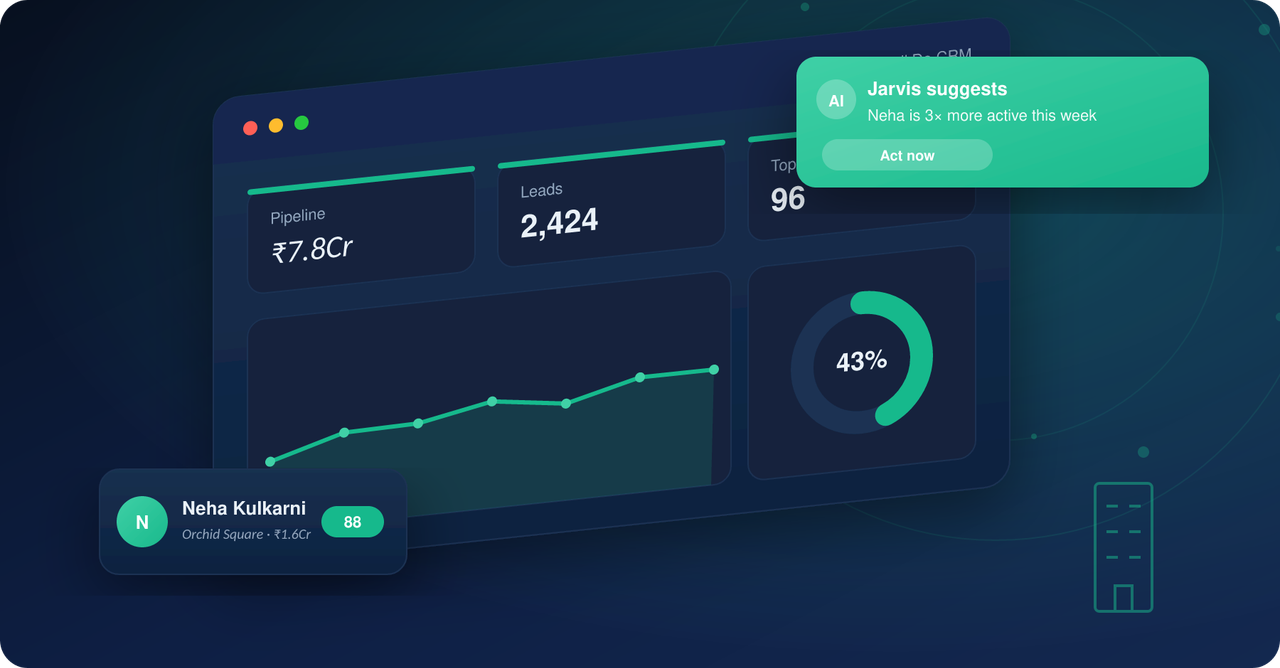
Post-sales in Indian real estate is the work that begins the day a buyer pays the token amount: the booking form, the agreement, demand letters against the construction schedule, loan coordination, registration and possession. A post-sales CRM keeps that work in one system with owners, due dates and a payment schedule, so collections do not slip and buyers are not left chasing updates. For developers, it is the difference between collecting on time and reconciling Excel sheets every month-end.
Why post-sales needs its own system, not just a sales CRM
Most developers start with a CRM built around leads and site visits. That works until the first booking. After that, the questions change: which demand letters are overdue, which buyers have a pending loan sanction, which agreements are waiting for signatures, who is handling possession checklists on Tower B? A lead pipeline cannot answer these, and teams fall back on spreadsheets, WhatsApp groups and memory.
The cost shows up as delayed collections, disputes about what was promised, and buyers who stop recommending you because nobody called them after the sale. Post-sales also protects the sales effort you already paid for, since a booked customer who is happy is your cheapest source of referrals.
From the team that built Sell.Do
See how Sell.Do runs your sales, pre-sales and marketing on one AI-first platform.
The post-sales journey, step by step
- 1Booking and token: capture buyer and co-applicant details, the unit, the scheme and the cost sheet agreed at booking.
- 2Agreement for sale: generate the document, track draft, review and execution, and keep the signed copy attached to the booking.
- 3Payment schedule: link demand letters to construction milestones, record receipts, and flag overdue instalments automatically.
- 4Loan and documentation: track bank sanction, disbursement tranches and KYC documents so nothing blocks a demand.
- 5Registration and possession: run a checklist, schedule the handover, and capture snags for resolution.
- 6After handover: feedback, referrals and service requests, so the relationship continues.
What a post-sales CRM should do
Keep every booking in one record
One booking view should show the buyer, the unit, the agreement status, the payment schedule, receipts, loan status and every conversation. When a buyer calls, whoever picks up should see the full picture in seconds.
Run the payment schedule and demand letters
Collections are the heart of post-sales. The system should generate demand letters from the schedule, track what is due and what is received, and alert the owner before an instalment becomes overdue rather than after. Developers should also be able to see receivables across projects instead of one spreadsheet per tower. For a deeper look at digitising this side, see how developers digitise payments.
Manage documents without folders on someone's laptop
Agreements, KYC, receipts, allotment letters and approvals belong against the booking, with access control. A shared drive with a folder per client does not tell you which document is missing; a checklist inside the booking does.
Automate the routine communication
Payment reminders, milestone updates and possession notices should go out over WhatsApp, SMS or email from templates, and every message should be logged on the booking. This keeps buyers informed and gives your team an audit trail if there is a dispute later. Our WhatsApp-first playbook covers how buyers now expect to hear from you.
Report what management actually needs
Collections due versus collected, bookings by stage, agreement turnaround time, cancellations and their reasons, and possession readiness by tower. If these live in a dashboard, the monthly review stops being a data-gathering exercise.
Should post-sales be a separate team?
For a single small project, one coordinator can handle it. Once you have multiple projects or a few dozen bookings a month, a dedicated post-sales team usually pays for itself. Sales teams are rewarded for closing, not for chasing a cheque or a signature six months later, and mixing the two means one of them suffers. A separate team still needs the sales context: what the buyer was promised, what concessions were agreed, which channel partner brought them. Sharing one CRM between presales, sales and post-sales is what makes that handover clean.
Common mistakes developers make
- Tracking collections in a sheet owned by one accountant, with no alerts and no history.
- Storing agreements and KYC on personal drives or email threads.
- Letting channel partner payout questions and buyer payment questions mix in the same inbox.
- Not recording promises made during sales, which then surface as disputes at possession.
- Treating possession as the end of the relationship instead of the start of referrals.
How Sell.do approaches post-sales
Sell.do carries the buyer from lead to booking to possession in one platform, so the context captured during sales (requirements, concessions, source and channel partner) is visible to the post-sales team. Bookings hold the cost sheet, agreement, payment schedule, demand letters, receipts and documents, and the inventory stays in sync when a unit is booked or cancelled. If you are evaluating tools, the detailed guides on post-sales management in real estate and how a CRM manages post-sales engagement go deeper, and the real estate CRM overview shows the full platform.
Frequently asked questions
What is post-sales in real estate?
Post-sales covers everything after a buyer books a unit: agreement, payment schedule and demand letters, loan coordination, documentation, registration and possession, plus ongoing service and referrals.
How is a post-sales CRM different from a sales CRM?
A sales CRM manages leads, follow-ups and site visits up to booking. A post-sales CRM manages the booking itself, the payment schedule, receipts, documents and handover. Using one platform for both keeps the buyer's history intact.
Do small developers need post-sales software?
If you manage more than a handful of bookings across projects, yes. The point at which spreadsheets start causing missed demand letters or document disputes arrives earlier than most teams expect.
Can a CRM send payment reminders automatically?
Yes. A good system triggers reminders from the payment schedule before the due date, logs the message on the booking, and escalates to the owner if an instalment goes overdue.
Who should own post-sales: the sales or a separate team?
For larger operations, a separate post-sales team works better because the incentives and skills differ, as long as it shares the same CRM record as sales.
Related reading
Insights from the Sell.do real-estate CRM team.